
Natural vs Lab-Grown Diamonds
Natural Diamonds
| Formed in the earth | |
| Historical significance and may have higher resale value | |
| Millions, if not billions of years old |
Lab-Grown Diamonds
| Formed in a laboratory | |
| Indistinguishable from natural diamonds using the naked eye | |
| Advanced instruments needed to differentiate from natural diamonds |
| Diamond | Natural | Lab-Grown |
|---|---|---|
| Chemical Composition | Carbon | Carbon |
| Crystal Shape | Octahedron | Cuboctahedron/Cube |
| Refractive Index | 2.42 | 2.42 |
| Dispersion | 0.044 | 0.044 |
| Hardness | 10 | 10 |
| Density | 3.52 | 3.52 |
| Inclusions/Blemishes |
Information received from the Gemologist Institute of America.
Moissanite
| Lab-grown stone that has a similar hardness to a diamond | |
| Available in colorless, near-colorless, and multiple color options | |
| Exceptional sparkle — Reflects more light |
| Chemical Composition | Silicon Carbide |
|---|---|
| Crystal Shape | Cuboctahedron/Cube/Rhombohedral |
| Refractive Index | 2.65 - 2.69 |
| Dispersion | 0.1 |
| Hardness | 9.25 |
| Density | 3.22 |
| Inclusions/Blemishes | — |
Information received from the Gemologist Institute of America.
Product Care & Services
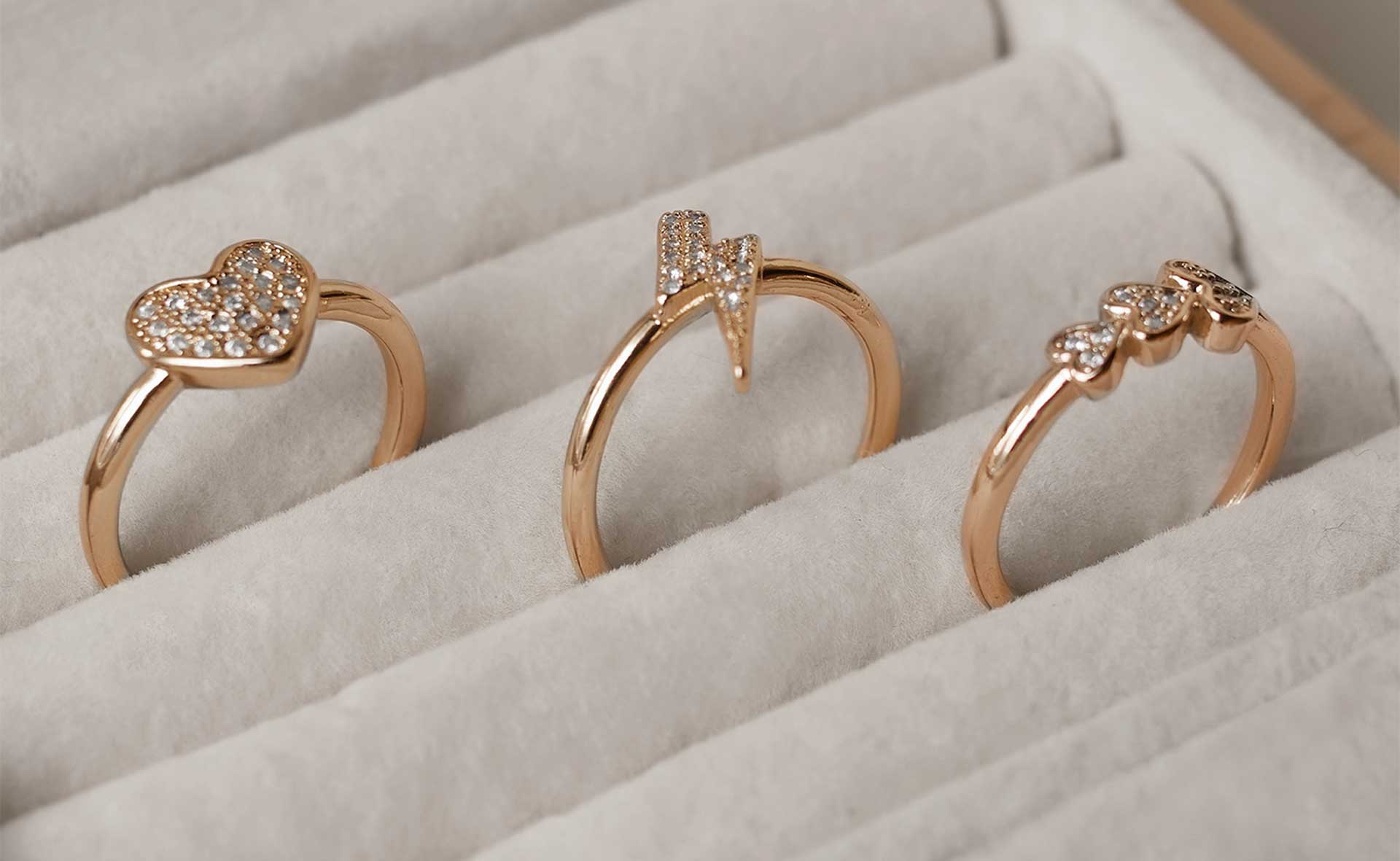
We treat each job with the care and attention to detail it deserves, all while providing you with the most competitive pricing. In fact, we offer polishing and cleaning free to all of our customers.
View Our Services
Visit Our Showroom
We look forward to welcoming you to our showroom and getting to know you. With over 30 years of experience, we can help you during your exploring and shopping experiences.
Visit Us